"The screen remembers those who act not only with their faces, but with their souls." The history of Indian cinema is inseparable from the women who defined its beauty, grace, and strength. They were not just heroines of silver screens but torchbearers of culture, courage, and change. The veteran actresses of Indian cinema are more than legends - they are living chronicles of art, emotion, and evolution. Each one shaped a new understanding of womanhood, making the industry not merely a world of glamour, but a mirror to society's heart. Among the icons who brought enduring brilliance to the screen stands Rekha, the quintessential symbol of transformation. Her journey from uncertain beginnings to the ethereal enchantress of Umrao Jaan and Silsila epitomizes reinvention. Rekha was never content with surface beauty; she infused every role with mystery, intelligence, and emotion. Her eyes could whisper defiance or heartbreak without words. Even decades later, she remains cinema's golden enigma - a reminder that true stardom lies in reinvention and restraint.
If Rekha was mystery, Hema Malini was majesty. Known as the "Dream Girl" of Indian cinema, Hema's balance of poise and playfulness defined the ideal heroine of her generation. From Seeta Aur Geeta's comedic brilliance to Sholay's fiery Basanti, she delivered versatility with elegance. A trained Bharatanatyam dancer, her classical discipline shaped her screen presence, giving her performances rhythm and authority. Beyond the screen, her longevity as a performer and politician marks her as a woman of vision - a true embodiment of grace in motion. Another trailblazer who redefined femininity in Indian cinema was Zeenat Aman. In the conservative 1970s, when heroines were expected to be demure, Zeenat introduced boldness - not as rebellion, but as authenticity. Her roles in Hare Rama Hare Krishna, Satyam Shivam Sundaram, and Don challenged stereotypes and brought Western sensibility to Indian glamour. Yet, beneath the chic style was a performer of substance who gave modern Indian women a cinematic mirror of confidence and self expression. Zeenat Aman made modernity respectable and sensuality dignified - a balance few have achieved since. Before them, the golden era had its own luminaries - Waheeda Rehman, for instance, whose serenity and expressive subtlety set a benchmark for emotional storytelling. In Guide, she portrayed Rosie with a depth that transcended its time, showing the world that Indian women on screen could be independent, passionate, and complex. Her performances never relied on dramatics; they flowed with sincerity, revealing that elegance is the most enduring form of rebellion. Equally powerful was Nutan, whose minimalist acting in films like Bandini and Sujata gave a new definition to grace. She proved that strength could be quiet and power could come from poise. Nutan's ability to convey moral depth with little dialogue made her one of the finest actresses Indian cinema has ever known. Her legacy continues to influence generations of actors who find inspiration in her simplicity and sincerity. From realism to romanticism, Shabana Azmi emerged as the intellectual force of the parallel cinema movement. Her work in Ankur, Arth, and Masoom dismantled illusions about womanhood and showcased the everyday struggles of Indian women with fearless honesty. Shabana brought theatre's intensity into cinema, proving that meaningful art could coexist with mass appeal. Her performances spoke of empathy, resilience, and conscience - qualities that make her not just an actress, but an institution. Where Shabana brought intellectual gravity, Smita Patil brought intensity. In a tragically short career, she created a legacy unmatched in emotional power. Her roles in Bhumika, Manthan, and Mirch Masala revealed a raw, unfiltered portrayal of women - strong, sensual, and human. Smita's expressive eyes and magnetic restraint made her one of the most extraordinary talents of her generation. Her work remains a timeless exploration of the Indian woman's strength and vulnerability. While these icons graced the silver screen, another form of artistic heroism was embodied by Sudha Chandran, whose story goes beyond cinema into legend. A trained Bharatanatyam dancer who lost her leg in a road accident, Sudha redefined the boundaries of determination. With a prosthetic Jaipur foot, she returned to perform - and later starred in Mayuri, a film inspired by her own life. Her transition into acting brought her national fame, but it was her resilience that made her a cultural symbol. Today, her presence in television and film represents triumph over tragedy - a true veteran of both art and adversity. The southern film industry also contributed unforgettable women to Indian cinema's mosaic. Savitri, often called the "Meena Kumari of the South," was a powerhouse of talent whose performances in Missamma and Devadasu remain benchmarks in emotional authenticity. Her combination of spontaneity and sensitivity captured hearts across languages. Likewise, Sridevi, who began as a child artist and rose to pan Indian superstardom, bridged eras. Her expressive genius in Sadma, Mr. India, and Chandni made her a phenomenon - blending innocence and allure with unmatched charisma. And no tribute to veteran actresses would be complete without mentioning Meena Kumari, the "Tragedy Queen" whose life mirrored her roles. Her performances in Pakeezah, Sahib Bibi Aur Ghulam, and Baiju Bawra defined cinematic melancholy. She transformed sorrow into art, making every tear poetic, every silence eloquent. Meena Kumari gave Indian cinema its soul - soft, sorrowful, and eternal. Together, these women - Rekha, Hema Malini, Zeenat Aman, Waheeda Rehman, Nutan, Shabana Azmi, Smita Patil, Sudha Chandran, Savitri, Sridevi, and Meena Kumari - form the grand heritage of Indian cinema's feminine power. Their journeys, though distinct, share one thread: an unwavering devotion to their craft. They worked in times when scripts were written for heroes, yet they carved unforgettable space for themselves - sometimes through glamour, sometimes through grit, always through grace. What makes these veteran actresses timeless is not just their beauty or fame, but their endurance. They thrived in an industry that often forgets women with time, yet they remain unforgettable. Their artistry matured like vintage wine - richer, more profound with age. Through them, Indian cinema found its emotional compass, its dignity, and its heart. As younger generations of actors rise, these women continue to serve as beacons - not of nostalgia, but of excellence. They remind us that acting is not imitation but revelation; that glamour fades but greatness endures. Their stories are lessons in art, resilience, and reinvention. The reel may age, but legends do not. And as the lights dim and the credits roll, the glow of these extraordinary women - Rekha's mystique, Zeenat's boldness, Hema's grace, Shabana's intellect, Smita's fire, Waheeda's serenity, Nutan's poise, Sudha's courage, Sridevi's charm, and Meena Kumari's soul - continues to illuminate the story of Indian cinema itself.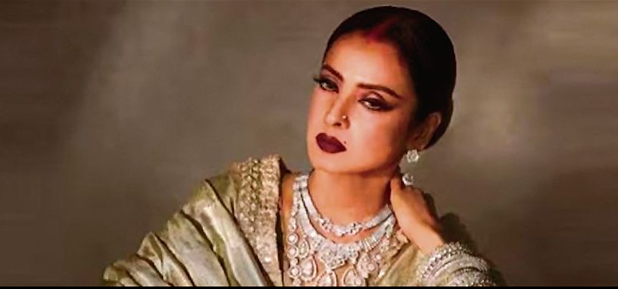
Positive Thoughts & Views