When the City Speaks Through Silence Delhi Crime never arrived as a conventional crime series. From its very first season, it positioned itself not as a spectacle of violence but as a quiet witness to pain, resilience, and responsibility. With Delhi Crime 3, the series returns again — not to shock the audience, but to sit with them in discomfort and truth. This season feels heavier, not because the crimes are louder, but because the questions are deeper. Delhi Crime 3 shifts its focus from the immediate shock of crime to the echoes that remain once the headlines fade, once the cameras move on, and once justice becomes a slow and uncertain process. At its heart, Delhi Crime 3 is about people rather than perpetrators. It is about officers who carry trauma home, families who wait for answers that never fully heal, and a city that continues to breathe despite repeated wounds. The narrative is restrained, almost cautious, allowing silences to speak louder than dramatic confrontations. This choice makes the series unsettling in the most honest way. Shefali Shah once again anchors the series with remarkable control. Her performance does not rely on speeches or emotional breakdowns. Instead, it lives in her eyes, in pauses, and in moments where duty and humanity collide. She portrays a woman who has seen too much yet refuses to become numb. This balance between strength and vulnerability gives the season its emotional core.
What distinguishes Delhi Crime 3 is its refusal to offer easy resolutions. The series does not promise closure, because reality rarely does. Investigations stretch across days and nights, progress is slow, and victories are often partial. This realism may feel uncomfortable, but it is precisely what makes the show powerful. It respects the intelligence of its audience and trusts them to sit with complexity. The city of Delhi itself becomes a silent character this season. Narrow lanes, crowded streets, and dimly lit offices create an atmosphere that feels lived in rather than staged. The camera does not beautify the city, nor does it condemn it. It simply observes, much like the show observes the human cost of crime. Delhi Crime 3 also reflects on the emotional toll of law enforcement. Officers are shown not as invincible figures, but as individuals constantly negotiating between professional detachment and personal conscience. The series asks an important question without stating it outright: how much can one witness before it erodes something inside? There is a quiet dignity in how Delhi Crime 3 unfolds. It does not exploit tragedy. It honors it by telling stories with care, restraint, and responsibility. In an era where crime content often relies on shock value, this season stands apart by choosing empathy over excess. Delhi Crime 3 does not aim to entertain in the traditional sense. It aims to remind. It reminds us that behind every case file is a human life, behind every statistic is a story, and behind every uniform is a person carrying the weight of justice. In the end, Delhi Crime 3 is not just a series about crime. It is about endurance. Of systems. Of people. Of a city that continues to stand, scarred but unbroken.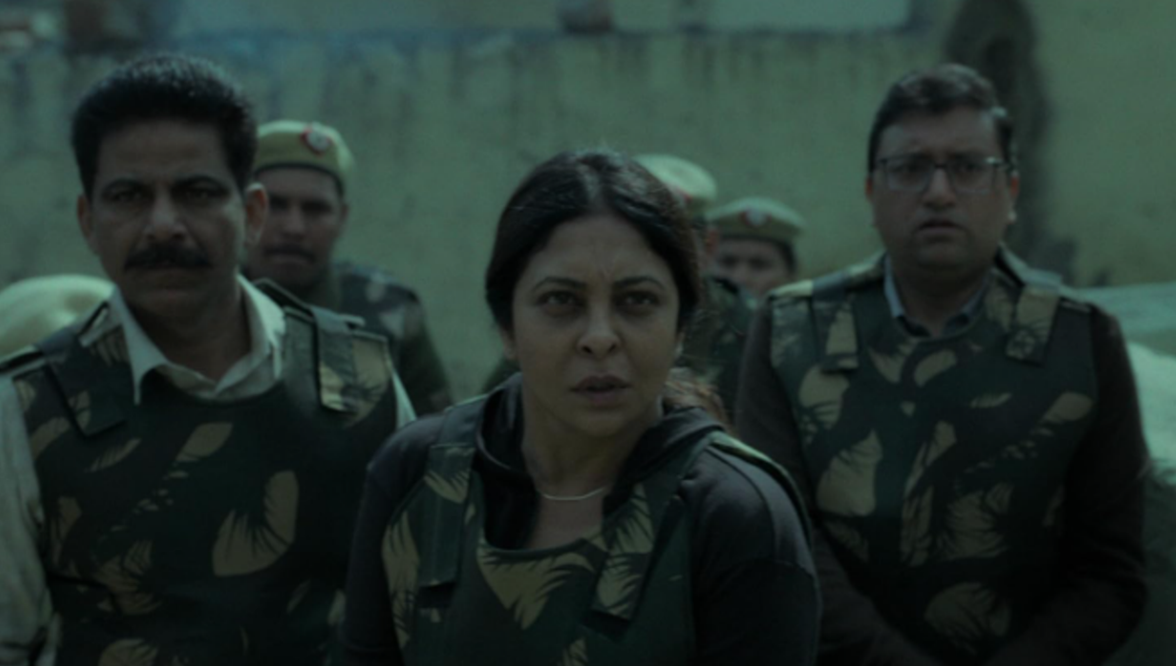
Positive Thoughts & Views